How to Revise Effectively in the Final Week Before Your Exam
The final week is not extra study time for a new topic. It is for making sure what you already know is fast, accurate, and holds up under pressure.
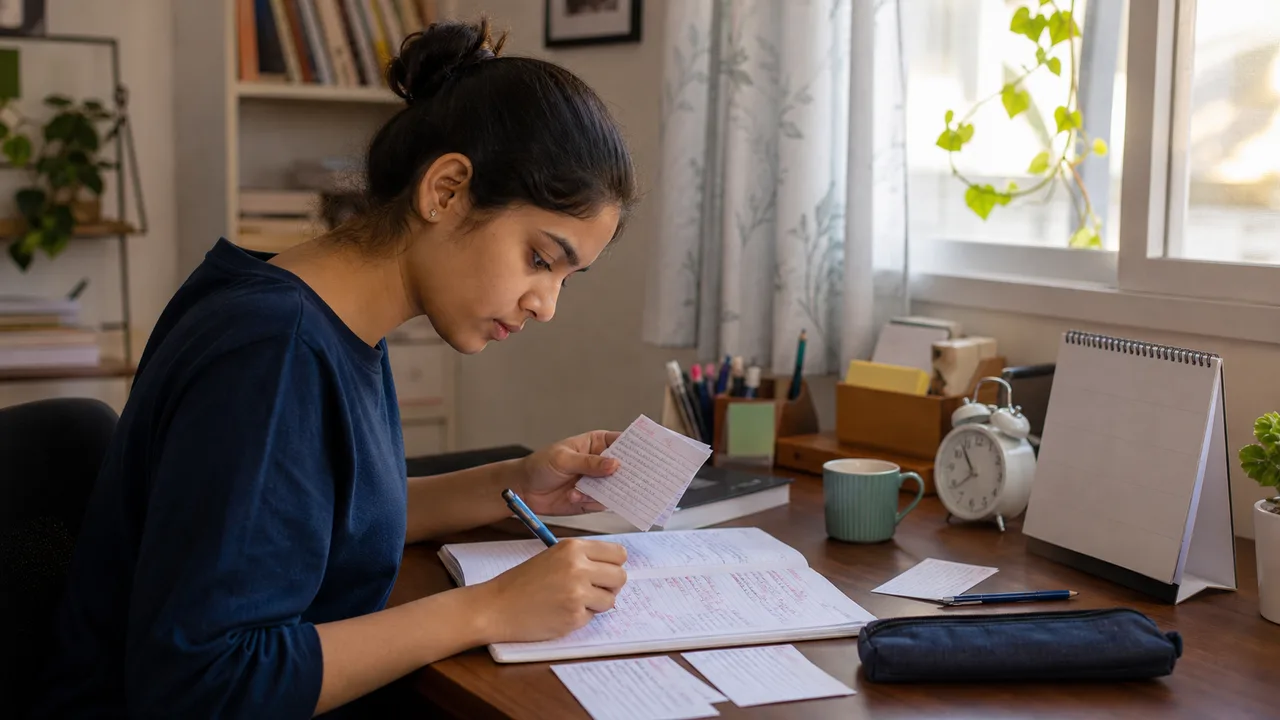
Most aspirants treat the final week as extra study time and try to squeeze in one more topic they never quite finished. That instinct usually works against you. The last week has one job: make what you already know faster and more reliable, not add to the pile of things you know.
Stop learning new topics, start consolidating
A topic you are seeing for the first time this week is more likely to cost you time on exam day than earn you marks. Even if you technically follow the concept once, you will not be fast or confident applying it under a countdown timer, and hesitation on one question eats into the time you needed for questions you already had covered.
- Stop new topics. Spend the week making known topics faster and more accurate, not covering more ground.
- Redo problems you got wrong before instead of just rereading the explanation for them.
- Retake an old mock test under full time pressure rather than only reviewing its solutions.
- Shift your sleep and practice-test timing to match your actual exam slot this week, not on exam day itself.
Revisit your weakest topics, not your strongest
It is tempting to spend revision time on topics you are already comfortable with, since it feels productive and confidence-building. Redirect that time to your weakest 20 to 30 percent instead: the topics you keep getting wrong or keep needing extra time on are where the final week actually moves your score.
The final week has one job: make what you already know faster and more reliable, not add to the pile of things you know.
Retake old mock tests instead of only rereading solutions
Rereading a solution tells you that you can recognize the right answer when it is in front of you. It does not tell you whether you can produce that answer from scratch, at speed, under the same pressure as the real exam. Pick a mock test you took a few weeks ago and retake it fully timed. If your score has not moved compared to your first attempt, that gap is exactly what this week should close, and how to analyze your mock test performance covers what to look at once you have the new result.
Normalize your exam-day timing this week
If your exam is scheduled for a specific time slot, start waking up, eating, and attempting practice tests around that same window this week. Adjusting your body clock on the morning of the exam itself is a bad time to discover you are not sharp at that hour. Small, boring routine changes like this rarely feel urgent, which is exactly why most aspirants skip them and then wonder why a normally comfortable pace felt off on exam day.
If negative marking is part of your exam, revisit understanding negative marking this week specifically: your guessing threshold under real time pressure is worth re-checking once, not just set once and forgotten.
Put the strategy into practice
Choose a checked mock test and apply what you learned while the idea is fresh.
Frequently asked questions
Should I start a new topic in the final week before my exam?
Generally no. A topic you are seeing for the first time this late is unlikely to be fast or reliable enough under exam pressure to be worth the time, compared to strengthening topics you already partly know.
Is it better to reread notes or redo problems in the last week?
Redo problems. Rereading a solution only confirms you can recognize the right answer; redoing the problem from scratch under time pressure tells you whether you can actually produce it on exam day.
How many mock tests should I take in the final week?
Focus on quality over volume this week: retaking a couple of past mocks under full time pressure and reviewing them carefully teaches you more than rushing through several new ones. See how many mock tests you should actually take for the broader picture.
Should I change my sleep schedule before the exam?
Yes, ideally starting several days out rather than the night before. Shift your sleep and wake times toward your actual exam slot so your body is not adjusting to an unfamiliar hour on exam day itself.